
Learn how to write a cover letter in 250-400 words
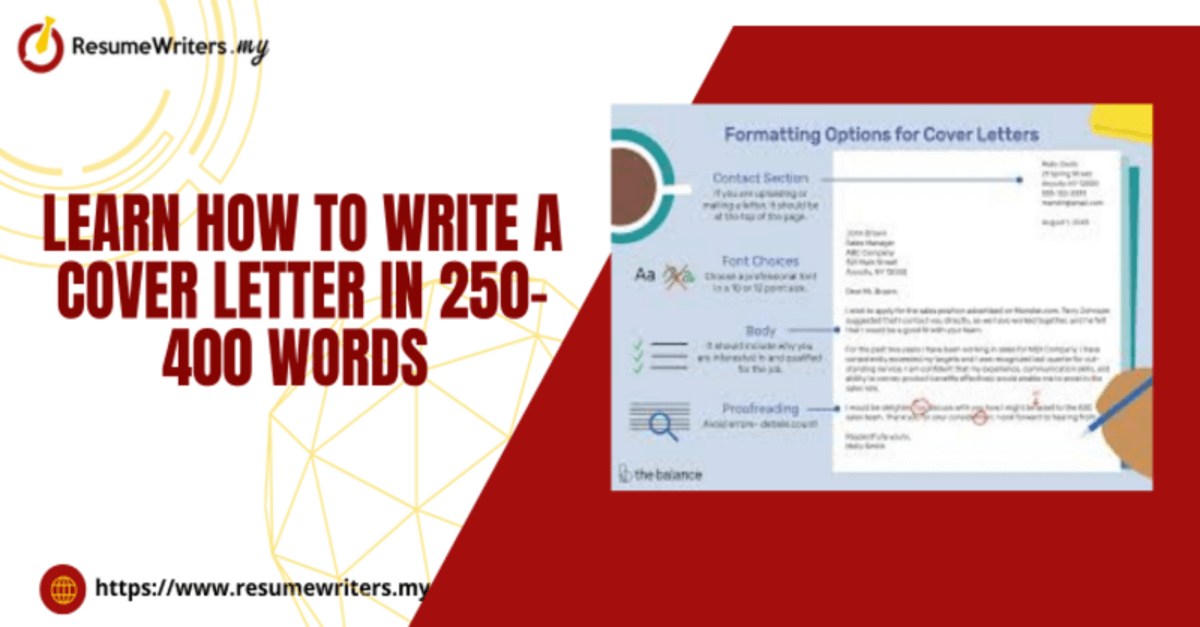
This isn’t another guide about writing the perfect cover letter. It is about avoiding the pile of rejection emails that start with a polite ‘Thank you for applying…’. Honestly, it makes everyone roll their eyes and say, ‘Yeah, yeah, I know.’
Guess what? You no longer have to read those replies. Neither will your résumé end up in the trash. The simple trick is to learn how to write a cover letter in 250-400 words. If you can catch the employer’s attention through the letter, there is more than an 80% chance that they will make an offer to you. Come on, your dream job won’t wait forever. Let us get started.
How To Write a Cover Letter for Job Application
A cover letter is basically when you are asked to summarise your entire career in one page, convince a stranger you are worth hiring, and do it without sounding desperate. Does it sound like child’s play? Maybe or maybe not. It all depends on your groundwork. Here are a few things that can fully prepare you to write a clear and convincing introduction statement.
- The foremost is a reliable cover letter writing service
- Then comes a supportive mentor or guide (like this one)
- Feedback from a trusted peer to catch what you miss
The Thumb Rules You Should Know
Employers have been receiving hundreds of applications written by humans and by AI. The amount combined is humanly impossible to go through within a short span, let alone picking the right candidate. So, they obviously need a trailer or synopsis sort of thing for you before they finally read your full résumé. The golden principle for it is ‘write less, but make it count.’ Here is how you can play it out.
1) Personalisation is Non-Negotiable
First things first, nobody wants to read a generic letter. Instead, the recruiters expect you to reference the company’s culture, mission, or recent projects. So, even if you think it is useless, you must tailor your cover letter to show genuine efforts and interest.
2) Quality Over Quantity
Yes, quality means more than everything at this point. You must try to keep your introduction to one page, ideally 250–400 words. Then, on a deeper level, make sure that all of your sentences either highlight a relevant achievement, explain why you are excited about the role, or connect your skills to the company’s needs.
3) Context Beyond the Résumé
Next, it is important to understand the difference between your résumé and this letter. You cannot simply start listing things you have done in both places. To make it easier, think of it like this. Your CV is a list of your achievements, whereas the cover letter explains why they matter. However, you may point out one extremely shining quality or success of yours.
4) Human Voice Beats AI Tone
Do we need to remind you that it is 2025? Because clearly, many candidates think that only they have access to advanced technology. It is time to change that. Recruiters are clever, too. Using tools and experience, they can quickly spot AI-generated fluff. So, be very careful with your tone. The thumb rule of how to customize cover letter is to sound like yourself. More professional but also conversational. Besides this, you need to avoid stiff templates at all costs.
5) Show Enthusiasm Strategically
The last rule is that if the role you are applying for requires a cover letter, then it should demonstrate genuine excitement. It is your valuable chance to go up straight and say, ‘Here’s why I care about this job and why I’m the right fit.’ However, this can be a little tricky for first-time applicants. They must hire résumé writing services to guide them through the process.
Which is More Important in 2025? Résumé or Cover Letter
The hiring process at the moment is hybrid. Recruiters rely on both automated filters and human judgment to hire new team members.
Similarly, even when résumés remain essential, cover letters have regained value as a way to stand out from the noise. As a result, recruiters are increasingly expecting short, tailored notes that connect a candidate’s top wins to a company’s current priorities.
This means to make the employer pause and read your letter of introduction, you need to keep it short and catchy. The table below further elaborates on the differences between the two.
| Item | Résumé | Cover Letter |
| Primary purpose | Record of experience and skills | Reason for your fitness in the role |
| Best for | Passing ATS and screening | Grabbing human attention |
| Length/format | 1–2 pages (bullets, metrics) | 200–400 words (conversational) |
| When it matters most | Early screening, technical roles | Competitive roles, career changes |
| Quick tip | Always quantify results | Open with a specific insight |
How To Write a Cover Letter in the Most Flawless Way
There is no one fixed formula or templates like résumé samples to write an introduction for employers. Everybody has their own personality, and their statement should speak more about it than their accomplishments. To understand how to write a flawless draft, one first needs to understand what are the most commonly made mistakes of 2025. Review the two samples given below very carefully, and then we shall discuss the avoidable errors.
Sample Number 1
| Dear Hiring Team, I’m applying for the Product Manager role at ABC company. I have extensive product experience and am a results-driven, strategic thinker who thrives in fast-paced environments. I am confident I can add value. My résumé lists my roles and responsibilities; I won’t repeat them here. I am a quick learner, hardworking, and eager to contribute. I use agile methods, A/B testing, and stakeholder alignment to ship products faster and consistently. I attached my résumé and references. Please consider me for an interview. Thank you. Sincerely, John. |
Sample Number 2
| Dear ABC Company’s Hiring Team, I am applying for Product Manager because your focus on customer-first product design matches my experience. At my current company, I lead a cross-functional team that improved retention through prioritised roadmaps and A/B testing; I can share case studies and metrics. I prioritise rapid learning, clear stakeholder communication, and measurable outcomes. I have attached a concise portfolio with two product case studies and links to dashboards. I would welcome a brief conversation to discuss how I can help ABC company accelerate product growth. Available next week, flexibly. Sincerely, John. |
Highlighting the Loud and Clear Mistakes
Out of the two samples, which one do you think is flawless? The second one, of course. Now, let’s move to a detailed scrutiny, where we pick as many slipups from the samples to show you what is wrong and why.
- To begin with, there is a generic opener saying ‘Dear hiring team’. It would have attracted attention if it said the creative team of ABC Company.
- Then there are vague claims saying that I have extensive experience. Who can tell how much that is? Instead of such adjectives, one should use quantitative details.
- A sentence that will offend anyone is ‘my résumé lists my role; I won’t repeat it here’. Therefore, think twice before you throw this sort of attitude at a hiring manager.
- Words like result-driven, strategic thinker, and fast-paced environments are the biggest indicators of AI use. It shows that the candidates have made little effort to make the introduction interesting.
- The second sample clearly mentioned a recent project of the company in the letter to grab attention. This is what you need to learn, too. Simply add an insight and then connect to yourself with smooth logic.
FAQs
1- When is a cover letter actually required?
You need to submit it when the job posting asks for one, when the portal requires it, or when you need to explain gaps, career changes, or a unique fit.
2- Should I address it to a specific person?
Yes. Whenever possible, address it to a named person. It shows you researched the role, adding personalisation. If you can’t find a name, address the hiring team or specific department instead of using a generic salutation.
3- What should I highlight in a modern cover letter?
You must highlight relevant outcomes, not duties. This means all your measurable results, case studies, and how your skills solve the company’s current problem are welcome.
Summing Up Everything
It is clear that candidates are hired based on their résumés, but did you know that the only reason those résumés reached the final shortlist was your cover letter? Yes. A letter of introduction that was written nicely and impactful to grab the employer’s attention. So, if you want to learn how to customize cover letter in 2025 and win your dream job, it is important that you present to them your true personality, preferably through a letter of introduction.

I’ve been a professional resume writer and career content creator for years. I offer career advice, CV formatting, and job application tips to help people succeed in their careers. My HR knowledge and writing skills help me provide practical solutions for a less stressful job search. I have helped many professionals improve their resumes leading to better interview results. My goal is to give useful advice for career growth.